
People inherit rugs, buy them on holiday, or pick one up at the High Point outlets because it matched the sofa — and then have no idea what they are standing on. That matters, because the most expensive mistake in rug ownership is treating an heirloom like a doormat, and the second most expensive is paying heirloom money to clean a doormat. Here is enough to tell the difference.
How a Rug Is Actually Made
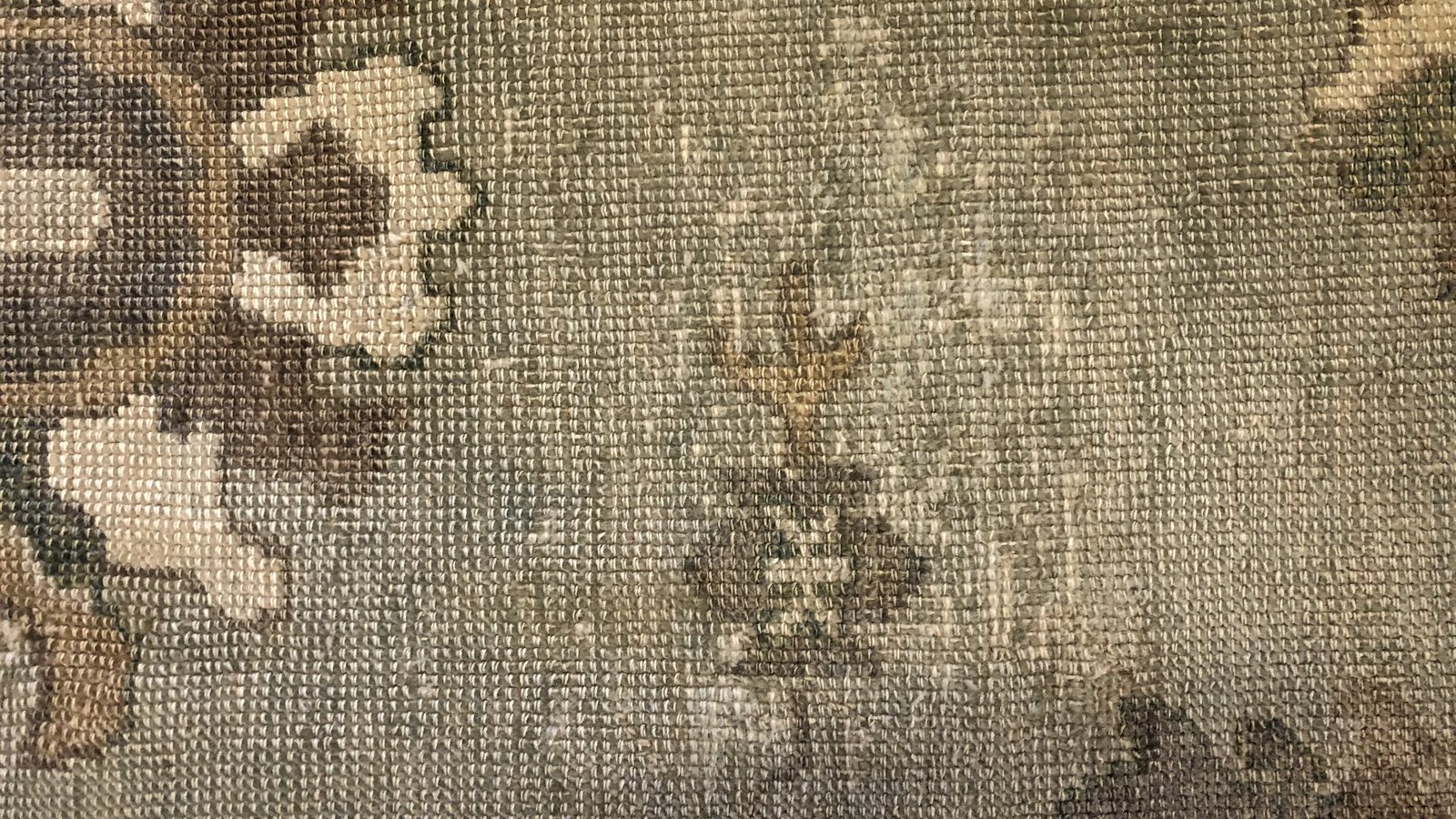
Every pile rug is built on a grid. Vertical threads called warps run the length of the rug, and they are what the fringe is — fringe is not sewn on, it is the foundation coming out of both ends. Horizontal threads called wefts run across and lock each row in place. What sits between them, and how it got there, is the whole difference between a thousand-dollar rug and a hundred-dollar one.
In a hand-knotted rug a weaver ties individual loops of wool or silk around pairs of warps, packs a row down, passes a weft, and does it again. A nine-by-twelve at a middling knot count contains a couple of million knots. That is why a real Persian rug costs what it costs, and why it can outlast the house, three owners and a flooded basement.
Knot types
- Persian (asymmetric) knot — wraps one warp fully and passes loosely behind the other. Allows finer detail and curved drawing, which is why it turns up in Persian, Indian and Chinese weaving.
- Turkish (symmetric) knot — wraps both warps evenly. Sturdier and slightly more geometric, common in Turkish and Caucasian rugs.
- Tibetan loop knot — wool looped continuously over a rod and then cut. Modern and quick, and the reason contemporary Nepalese rugs have that thick, even pile.
Telling Hand-Knotted from the Rest in Ten Seconds
Turn the rug over. That is the entire trick, and it settles the question faster than any label sewn to the back.
| Construction | The back looks like | What it means |
|---|---|---|
| Hand-knotted | The pattern is visible on the back in slightly irregular knots. Fringe is continuous with the foundation. | Decades to centuries of life. Fully cleanable and fully repairable. Holds value. |
| Hand-tufted | A canvas or scrim backing glued over everything, hiding the structure. Fringe is a separate strip sewn on. | The latex adhesive eventually breaks down and smells, and humidity speeds that up. Cleanable with care. |
| Machine-made | A perfectly uniform grid, often over a stiff synthetic backing. The flawless regularity is the tell. | Very cleanable, essentially not repairable, inexpensive to replace. |
| Flatweave (kilim, dhurrie) | No pile at all. Same pattern both faces, reversible. | Durable and light. Needs careful moisture control when washed. |
Quick field test: bend the rug back on itself and look at the base of the pile. Knots tied around visible warps mean hand-knotted. A wall of glue means tufted.
Fibres, and What Each One Wants
Wool
The default for good reason. Wool fibres are naturally coiled, so they spring back under furniture; they carry lanolin, which sheds soil until harsh detergent strips it out; and they are hard to ignite. Wool also holds a great deal of water without feeling damp to the hand — excellent for comfort, a real problem in a Carolina August, and the reason mildew is one of the most common things we are called about.
Silk
Fine, strong in tension, unmatched for detail and sheen. Also unforgiving: it scorches under heat, weakens while it stays wet, and browns if a spill is left in it. Silk rugs belong away from direct traffic and direct sun, and they do not get full immersion.
Viscose, bamboo silk, art silk
All the same material under different marketing: regenerated cellulose. It looks like silk in the showroom and behaves like wet paper in a real room. Viscose loses most of its strength when saturated, yellows from plain water, and mats permanently underfoot. If you own one, keep it out of dining rooms and entries, and never let anyone wet-clean it conventionally.
Cotton
Usually the foundation rather than the pile, and in flatweaves the whole rug. Cotton absorbs heavily, shrinks if it is dried under tension, and is the first part of a rug to rot after a soaking. It is also forgiving to work with, which is why flatweaves are the easiest good rugs to own.
Jute, sisal and seagrass
Beautiful texture, terrible relationship with water. These plant fibres stain from their own moisture, brown at the edges, and mildew faster than anything else in a humid room. In the Piedmont, keep them out of sunrooms, basements and anywhere near a door that gets propped open in summer.
Synthetics
Polypropylene, nylon and polyester. Inexpensive, fade-resistant and genuinely practical for a house with children and a dog. They crush under furniture and cannot be repaired, but they clean well and cost little to replace — which is the entire point of them.
Piedmont Care Notes
Most rug care advice online is written for a dry inland climate and quietly fails here. Central North Carolina puts down a heavy tree pollen season in spring, spends its summers at high dew points, sits on iron-rich clay, and houses a great many rugs on floors built over vented crawlspaces. Adjust accordingly.
Wash after pollen season, not before it
The instinct is to clean in spring and be done. It is backwards. Pollen comes in from late March into May, settles to the base of the pile, and then has all summer with the humidity to feed mildew. A rug washed in early spring collects the whole load a fortnight later. Washing at the end of the pollen season takes it out before the humid months arrive, which is when it actually causes trouble.
Let the rug breathe, especially over a crawlspace
The most common damage we see is not a stain — it is a rug that has been slowly suffocating. A solid rubber or vinyl pad over a floor with cool crawlspace air beneath it traps moisture and holds it against the foundation. Use a breathable pad and lift the rug occasionally so both faces and the floor can dry out. In a house that gets shut up for weeks at a time, that single habit prevents more damage than any product you can buy.
Deal with clay at the door
Piedmont red clay is iron-oxide mineral in hard, plate-shaped particles. It stains wool orange and it cuts it. A doormat outside and a second one inside, shoes off where that is the household habit, and a genuine walk-off run at the door that everyone actually uses will keep most of it out. What gets past that has to come out in dusting, before it has another season to grind.
Vacuum gently, and turn off the beater bar
Grit is what wears rugs out, so vacuum regularly — but with the beater bar off. On fringe it is destructive, and on an older rug it accelerates wear on the exact spots that are already thin. Slow passes with suction alone remove more from the base of the pile than fast passes with a spinning brush.
Rotate for the sun, and watch the winter heat
Light through a big window is reliably one-directional, and it takes the red out first. Turn each rug a hundred and eighty degrees a couple of times a year and the fading stays even instead of leaving a line you cannot unsee. In winter, central heat in an older house can hold indoor humidity in the twenties for weeks, which makes wool brittle at the folds — a humidifier in the room with the good rug is not fussiness.
Blot spills immediately, and skip the miracle cleaner
Press a white towel straight down and lift — do not rub, which drives the spill into the foundation and fuzzes the pile. Cool water handles most fresh spills. Over-the-counter spot removers are usually high-pH and will pull dye out of wool, turning a small problem into a permanent one.
Store rugs loose, dry and out of the basement
A rug rolled tight in plastic in a basement or an unconditioned garage is being sealed in with the humidity it went in with. Roll loosely with the pile facing out, keep it off the floor, wrap in breathable cloth rather than plastic, and store it in conditioned space if there is any. A rug that has spent a Carolina summer in a damp basement needs washing, not airing.
Act fast on water
A wet rug in this climate has roughly forty-eight hours before mould takes hold in the foundation. Burst pipe, failed water heater, storm water in a basement — get the rug up off the floor, do not seal it in plastic, and get it to a specialist quickly. Rugs people were ready to throw out are frequently recoverable. Here is what that restoration involves.
How Often Should It Be Cleaned?
| Where the rug lives | Professional cleaning |
|---|---|
| Entry, hallway, main living room | Every 12 months |
| Dining room or kitchen-adjacent | Every 12–18 months |
| Bedrooms and low-traffic rooms | Every 2–3 years |
| Homes with pets or allergy sufferers | Every 6–12 months |
| Houses on a long clay or gravel drive | Every 12 months — clay grit cuts as well as stains |
| Rooms over an unconditioned crawlspace | Every 12 months, and lift the rug between times |
| Any rug that has been wet | Immediately |
Is It Worth Anything?
Value in a hand-knotted rug comes from knot density, the quality of the wool, whether the dyes are natural or synthetic, age, origin, condition, and whether the design is any good. A finely woven antique in sound condition can be worth many times what a large coarse modern rug costs, even though the modern one covers more floor.
Two things people get wrong. First, condition matters enormously — unravelling ends and moth grazing knock value down quickly, and both are repairable, which is why fixing them usually pays for itself. Second, wear is not automatically bad: an old rug with even, honest low pile and intact structure is worth far more than one with pristine corners and a hole in the middle.
If you are curious about something you inherited, send photographs of the front, the back and the ends. You will get told what it is, roughly where it came from, and whether it is worth restoring — at no charge and with nothing attached.
Short Glossary
- Warp — the lengthwise foundation threads; the fringe is their exposed ends.
- Weft — the crosswise threads that lock each row of knots in place.
- Pile — the surface you walk on, made of the cut ends of the knots.
- KPSI — knots per square inch; higher means finer detail and more work.
- Abrash — natural colour banding from different dye lots. A feature of hand-dyed wool, not a flaw.
- Selvedge — the wrapped side edges that stop the rug unravelling sideways.
- Dry rot — foundation fibres weakened by prolonged damp; the reason wet rugs need urgency.
- Blocking — stretching a washed rug back to square while it dries.